Trending

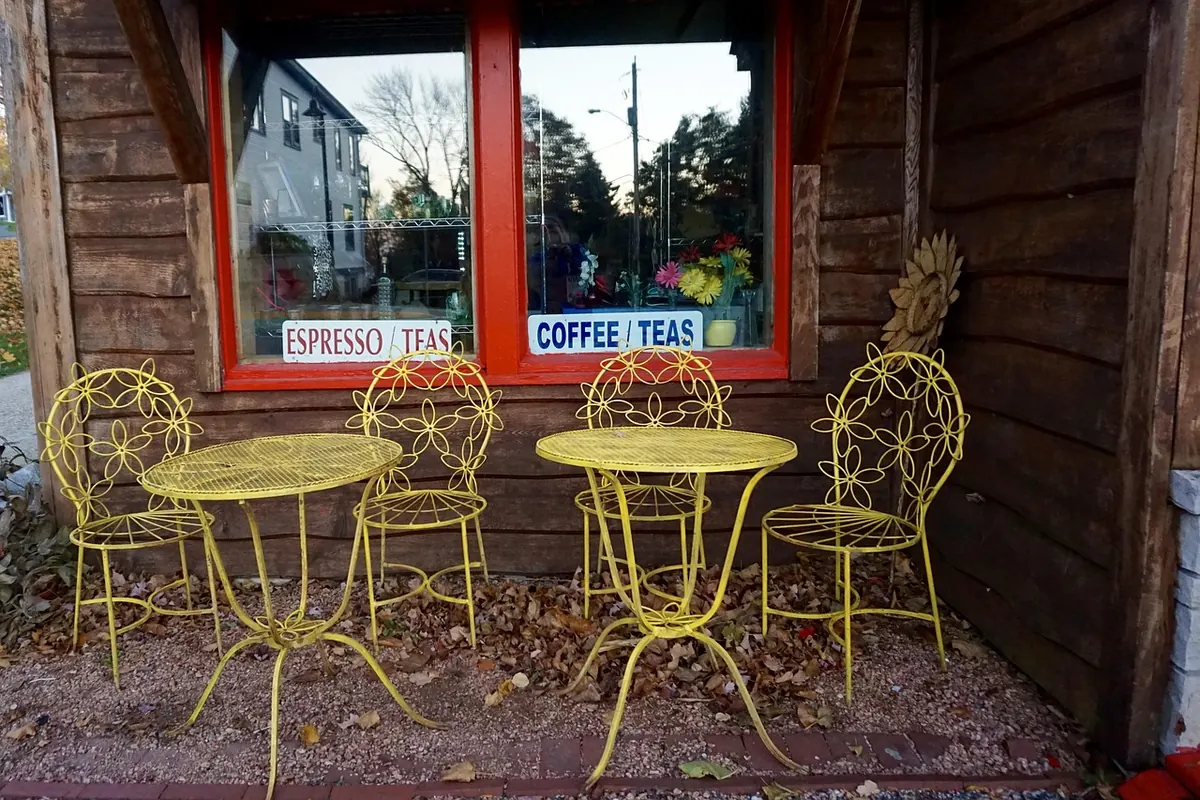
A small patio is not a compromise. Eleven or twelve square metres of paving, a wall on two sides and a slice of sky is enough for four people to eat, talk and stay out long after the plates are cleared — provided the space is set up like a room rather than a leftover corner of the garden. The difference between a patio you walk past and one you use every evening comes down to four decisions: how the seating is arranged, what blocks the view of the neighbours, where the light falls, and what grows around the edges. None of it demands a big budget. It demands deciding what the space is for before you buy anything.
Start with a tape measure and a piece of chalk. Mark the footprint on the paving, then mark the swing of the back door and the route people take from the kitchen. Whatever is left is your actual room, and it is usually smaller than the outline suggests. On a patio of three by four metres, that usable core is often closer to two and a half by three.
Now give the space a single primary job. A compact patio can host a dining table or a lounge grouping, but rarely both at once without feeling like a storage yard. If you eat outside most nights, make dining the anchor and choose a bistro table that folds flat or a bench that tucks under the table edge. If you mostly sit with a drink, build around conversation and keep a small tray table for plates. Everything else — the spare chairs, the cooler, the kids' toys — needs a home that is not the middle of the floor.
Two practical rules save a lot of regret:
The commonest mistake on a small patio is pushing every piece of furniture flat against the boundary. It looks tidy and it kills conversation, because people end up sitting in a line, shoulders parallel, staring at the same shrub. Pull the seating into an L or a loose U instead. Two chairs angled towards a small sofa, with a low table in the gap, will seat four people comfortably in roughly 2.5 by 2.5 metres.
Distances matter more than furniture style. Seats placed 60–90cm apart, angled slightly towards each other, let people talk without raising their voices. A coffee table set 40–45cm from the front of the sofa is close enough to reach a glass and far enough to stand up from. If your group ends up more than about three metres apart across the circle, the arrangement is too wide and the evening will fragment into two conversations.
A corner bench is the most efficient seat you can buy for a compact space: it hugs two boundaries, seats three, and the space underneath takes a lidded box for cushions and candles. Add an outdoor rug to define the sitting area and stop the paving from dominating, then keep a folding side table or two for drinks so nobody balances a glass on the armrest.
Privacy on a small patio is usually a problem of sightlines rather than space. Seated eye level is around 1.2 metres, so a screen of 1.5–1.8 metres will block most overlooking without turning the patio into a box. Before building anything permanent, though, check the rules that apply where you live — height limits for boundary structures vary by area and sometimes by whether the boundary faces a road.
The trick is to build the screen in layers rather than one solid slab. A slatted panel at the base gives privacy where you need it; open slats or a climbing frame above let light through and keep the sky visible. Add a shade sail or a small pergola over the seating and you have enclosure overhead without losing air movement. If two sides are already walls or a fence, screen only the exposed corner — the contrast between open and sheltered is what makes the space feel protected rather than confined.
Take care to leave one deliberate view out: a gap framed towards a tree, a distant roof line, a pot of tall grasses. A view outward is what stops a screened corner from feeling like a waiting room.
Plants soften noise, hide the base of fences, and give the eye something close to rest on. On a small patio, plant the perimeter and keep the centre clear. Put the tallest things in the corners, where they add height without eating floor space, and keep everything in front of the seating low enough that you can still see over it when sitting.
Pots are the workhorse here, and size matters: containers of 40–50cm across hold enough soil to stay damp for a day or two, while small pots dry out by mid-afternoon and punish you in August. Use fewer, bigger pots. Repeating three of the same plant reads as intentional design; ten different ones read as a collection. For year-round structure, choose a few evergreens — bay, rosemary, olive, box — and then add something that moves, like a grass, and something scented at nose height near the seats: jasmine, lavender, mint, or a climbing rose on the screen.
Group pots so their foliage overlaps and hides the plastic rims. Check drainage before you fill anything, and remember that anything against a warm south-facing wall will need more water than the rest of the garden.
A patio that is only comfortable in July is not really a room. A simple shade sail, an offset parasol or a pergola with a deciduous climber takes the glare off the seating in the middle of the day, and it does more for privacy overhead than most people expect. In cooler months, a fire bowl or a patio heater extends the evening, but keep any heat source well clear of fabrics, overhangs and dry planting, and follow the manufacturer's clearances.
A basket of wool throws by the door is the cheapest way to buy another six weeks of use at each end of the year. Store them somewhere dry, and choose a bench with a lid rather than relying on a pile of cushions that will be soaked by the first autumn rain.
The single fastest way to ruin a sheltered patio is a bright light mounted high up. It flattens the space, glares into faces, and makes the garden beyond disappear into blackness. Work in layers instead, and keep every source below seated eye level.
For ambient light, a string of warm bulbs run along the pergola or the top of the screen gives a soft wash without a hotspot. For task light, a small rechargeable lamp on the table is enough to see what you are eating. For depth, one uplighter tucked into a shrub or aimed at a wall will graze the texture and make the boundary feel further away than it is. Warm bulbs, modest output, and a timer or smart plug so the patio is already lit when you step outside.
Any fixed electrical work outdoors should be on a properly protected circuit — if you are not confident, have an electrician fit it. Candles and lanterns do the same job for nothing, provided they sit on stable, non-flammable surfaces away from planting and fabric.
You do not need to finish the design in one go. Build it in this order and live with each stage for a week before adding the next.
Then sit out there for a fortnight and notice what you reach for and what gets in the way. Shift the chairs, swap a pot, move a lamp. The best small outdoor rooms are not designed on paper — they are adjusted, slowly, until everything within arm's reach is exactly what an evening outside requires.
Photo: vonpics / Pixabay